
5 Questions Employers Should Be Asking about E-Verify in 2012

[Editor’s Note: today’s post is brought to you by guest blogger Katie Minervino, Associate Attorney in the Immigration Group at Pierce Atwood LLP. Katie assists employers and employees in employment authorization needs and provides clients with support and guidance on employment verification requirements, best practices, and audit response.]

1. Am I complying with applicable laws requiring E-Verify use?

E-Verify is an online service administered by the federal government that allows employers to run information about new hires through Department of Homeland Security and the Social Security Administration databases to attempt to verify work authorization.

In the absence of comprehensive federal immigration reform, and particularly in the face of high levels of unemployment, states and local governments are stepping hard into the employment verification debate. A number of states, counties and municipalities have passed laws that mandate use of the otherwise voluntary E-Verify program.

E-Verify laws warrant a close and careful look by all employers to determine when, if and how E-Verify mandates may affect them. Employers already using E-Verify should confirm they are making any necessary updates to their program use to meet state requirements (for example, adding hiring sites in affected states, if they are currently only using E-Verify in other locations).

Currently only certain federal contractors are required to use E-Verify under federal law. More expansive legislation that would require E-Verify use by all employers has been introduced in both the House and the Senate, but such federal requirements are not currently in effect.

2. Does my company have a contract that includes an E-Verify provision?

Employers should be monitoring all federal contractors for an E-Verify clause. Additionally, state contractors are also increasingly required to use the program, and private employers are now including immigration compliance provisions to the terms of service contracts that include required use of E-Verify now or in the future. Employers should review all contracts for any language that may require their use of the program.

3. If my company will be required to use E-Verify, what steps should we be taking now to prepare?

Employers should note any upcoming deadlines for required use of E-Verify. A company facing an upcoming E-Verify requirement should familiarize itself with the E-Verify Memorandum of Understanding, notice and employer requirements of the program, and make internal decisions and designations about how the program will be administered and by whom. Before the internal start date of E-Verify use, a company should plan to train appropriate human resource professionals and update its employment verification compliance policy to reference and incorporate its use of E-Verify.

4. Should my company voluntarily enroll in E-Verify to avoid the burden of monitoring local and state developments?

As states and local governments continue to pass E-Verify laws, employers must closely and regularly monitor specific requirements where they do business. Multi-state employers may consider nation-wide voluntary participation in the program to avoid the burden of complying with varying state requirements, depending on the employer’s views relating to the program and ability to satisfy E-Verify requirements.

5. How well does my company currently comply with employment verification requirements?

Most companies are aware of the federal requirement that companies verify the employment authorization of new hires by completing Form I-9. Employers should evaluate current employment verification compliance practices and consider a self-audit to confirm the employer’s Form I-9s are properly prepared and retained.

E-Verify is a supplement to, not a replacement for, the current I-9 verification system. Employers currently enrolled in E-Verify must still fulfill all obligatory employment verification requirements under current federal law, such as completing and retaining Form I-9. Employers considering enrolling in E-Verify should confirm they are currently meeting all federal employment verification requirements before undertaking additional responsibilities and requirements relating to E-Verify.

Disclaimer: The content of this post does not constitute direct legal advice and is designed for informational purposes only. Information provided through this website should never replace the need for involving informed counsel on your employment and immigration issues.


Discover how Tracker’s electronic I-9 software service lets you produce flawless I-9s every time. Feel free to contact us we’d love to hear from you.
Do you have an employee working in Georgia? If so, new E-Verify requirements should be on your mind.

[Editor’s Note: today’s post is brought to you by guest blogger Katie Minervino, Associate Attorney in the Immigration Group at Pierce Atwood LLP. Katie assists employers and employees in employment authorization needs and provides clients with support and guidance on employment verification requirements, best practices, and audit response.]

Georgia’s comprehensive immigration law requires that private employers enroll in E-Verify as a condition to obtaining or renewing a broad range of business licenses and other documentation required to operate a business or engage in a professional service.

While some provisions of the Georgia law took effect on July 1st, the E-Verify requirements are being phased in, with staggered E-Verify compliance dates based on the size of an employer. The initial phase-in for private employers started in the new year, with businesses employing more than 500 employees required to use E-Verify for new hires as of January 1, 2012. Businesses with less than 500 but more than 100 employees must start using E-Verify by July 1, 2012, and businesses with less than 99 but more than 11 workers must use the program by July 1, 2013. Businesses with 10 or less employees are exempt.

All employers must look closely at whether they have any employees performing services in Georgia that trigger a license requirement because if so, they may be caught in the cross-hairs of Georgia’s immigration enforcement efforts.

Counting your employees for purposes of compliance deadlines

To determine the number of its employees for E-Verify purposes under this law, a business must count its total number of employees working at least 35 hours a week as of January 1st of the year the E-Verify mandates for that employer kick in. The definition of “employee” in the Georgia law cross-references the Georgia tax code, and as it is currently written, does not specify that an employer need only count employees on a Georgia payroll. The law further contains no language limiting the employer’s required use of E-Verify to new hires within the state of Georgia, leaving the door open for an interpretation of the law with a far-reaching scope outside of the boundaries of Georgia for multi-state employers.

If an employer exclusively employs workers on a Georgia payroll, the analysis is simple and the employer should look to its number of full-time employees paid under its federal employer identification number to determine when the E-Verify requirement applies.

But my employee only works in Georgia – I’m not a Georgia-based business

If an employer has payroll employees in multiple states, including Georgia, the situation is a bit stickier. Such employers should determine, first, whether all these employers are connected to the same federal employer identification number (FEIN). If the employees are distributed among multiple FEINs (for example, in the case of a parent and subsidiary) and the total number on each FEIN is less than 500, the employer’s E-Verify requirements will be deferred in Georgia until at least July 2012.

If the employees are all paid under the same FEIN and number 500 or more, the recommended approach is for an employer to enroll in E-Verify for its Georgia hiring sites on or as soon after January 1st as possible, thus placing the employer in the strongest position to obtain the wide range of business and professional licensure in Georgia for which proof of E-Verify is required.

I’m not prepared to potentially “jump the gun” on an otherwise voluntary program.

A company applying to obtain or renew its Georgia business license or an employee obtaining a professional license in Georgia must present an affidavit attesting employer compliance with the E-Verify requirements of the Georgia immigration law. While Georgia has yet to release rules or provide any clarification on how employees should be counted under this law, the Georgia Department of Law released affidavits for employers to present when applying for licensure: one for claiming less than 11 employees, and thus exemption from the E-Verify requirements, and another for employers with 500 or more employees. The affidavit for employers with more than 500 employers (valid from January 1, 2012 to June 30, 2012), like the immigration law itself, does not specify that the total number of employees is restricted to Georgia. The affidavit also asks for an employer’s E-Verify identification number and the date that number was issued.

Employers not already in E-Verify with 500+ employees and a limited Georgia presence may be justifiably on the fence about whether they want to enroll in E-Verify under the earliest possible deadline. These employers should consider the cost to working out the wrinkles in a license renewal process for a professional who needs a Georgia license and is unable to provide the required compliance affidavit.

For private employers without federal contracts, E-Verify use is limited to new hires. If an employer hires no (or a minimal number of) employees in Georgia in 2012, actual use of the program will be minimal and the burden relatively low compared to the cost if Georgia takes a hard line issuing licenses and later releases rules specifying that employers must consider all US employees for E-Verify compliance and deadlines.

Further, employers have a range of options in using and administering E-Verify within their company and can obtain the E-Verify Identification Number required as a condition to obtaining licensure without triggering E-Verify obligations for any hiring sites outside of Georgia.

Employers can also choose to administer E-Verify use for Georgia hires at a location outside of Georgia, for example, an out-of-state corporate headquarters.

The Georgia E-Verify law exemplifies the challenges that state-specific E-Verify requirements impose on employers, requiring additional compliance obligations for private employers while lacking clarity on practical aspects of the law.

Disclaimer: The content of this post does not constitute direct legal advice and is designed for informational purposes only. Information provided through this website should never replace the need for involving informed counsel on your employment and immigration issues.

Discover how Tracker’s electronic I-9 software service lets you produce flawless I-9s every time. Feel free to contact us we’d love to hear from you.

Various State E-Verify Laws Effective January 1, 2012

[Editor’s Note: today’s post is brought to you by guest blogger John Manley, U.S. Immigration Attorney and Co-Liaison to U.S. Customs and Border Protection.]

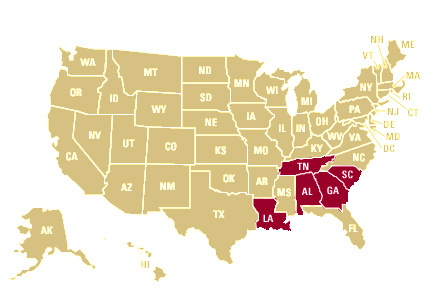
Several states began requiring various employers to use the E-Verify system as of January 1, 2012.

Here is a list of these states and their E-Verify laws that go into effect in varying stages:

1. Louisiana: Act 376 will apply to private employers who bid on public entity projects or enter into contracts with a public entity on or after Jan. 1, 2012. The law requires that private employers who bid on a public entity project or enter into a contract agreement with a public entity for the physical performance of services, confirm in a sworn affidavit that the company uses the E-Verify® system to validate the legal citizenship or legal alien status for all employees within the United States. If the employer is awarded a contract, he is required to E-Verify all new employees in Louisiana hired through the duration of the contract. The requirement applies to both general contractors and their subcontractors.

2. Alabama: Effective January 1, 2012, state contractors must use E-Verify. Effective April 1, 2012, every business entity or employer in this state shall enroll in E-Verify and thereafter, according to the federal statutes and regulations governing E-Verify, shall verify the employment eligibility of the employee through E-Verify. A business entity or employer that uses E-Verify to verify the work authorization of an employee shall not be deemed to have violated this section with respect to the employment of that employee.   SOURCE

3. Tennessee: under the Tennessee Lawful Employment Act of 2011,the employment verification provisions will be phased in as follows [SOURCE]:

  • All state and local government agencies must enroll and participate in E-Verify or request and maintain an identity/employment authorization document from a newly hired employee no later than January 1, 2012
  • All private employers with 500 or more employees must enroll and participate in E-Verify or request and maintain an identity / employment authorization document from a newly hired employee no later than January 1, 2012
  • All private employers with 200 to 499 employees must enroll and participate in E-Verify or request and maintain an identity / employment authorization document from a newly hired employee no later than July 1, 2012
  • All private employers with 6 to 199 employees must register and utilize E-Verify or request and maintain an identity / employment authorization document from a newly hired employee no later than July 1, 2013

4. South Carolina: the South Carolina Illegal Immigration and Reform Act requires all employers to enroll in the U.S. Department of Homeland Security’s E-Verify system beginning January 1, 2012 and to verify the legal status of all new employees through E-Verify within three business days. Employers may no longer confirm a new employee’s employment authorization with a driver’s license or state identification card. SOURCE

5. Georgia: The E-Verify Provision in Georgia’s H.B. 87 will require Georgia businesses with 500 employees or more to check their employees using E-Verify. Workers must be U.S. citizens or otherwise authorized to work in the country in order to be hired. The requirement takes place in phases. Starting July 1, businesses of 100 or more must use E-Verify. By January 2013, all businesses with more than 10 employees will be required to use the system. Those with 10 or fewer employees are exempt. SOURCE

Disclaimer: The content of this post does not constitute direct legal advice and is designed for informational purposes only. Information provided through this website should never replace the need for involving informed counsel on your employment and immigration issues.


Discover how Tracker’s electronic I-9 software service lets you produce flawless I-9s every time. Feel free to contact us we’d love to hear from you.

San Diego-Area Bakery Sentenced for Employing Illegal Workers

[Editor’s Note: today’s post is brought to you by guest blogger John Manley, U.S. Immigration Attorney and Co-Liaison to U.S. Customs and Border Protection.]

U.S. District Judge Thomas J. Whelan has ordered The French Gourmet, Inc. to forfeit $109,200 in illicit proceeds gained from the illegal hiring practices and pay $277,375 for its felony conviction of employing more than 10 illegal alien workers in a 12-month period.

This case has gained considerable attention and is a reminder to employers to make sure they have a proper I-9 Compliance Program.

In this case, the French Gourmet operated a restaurant, bakery and catering business for decades in La Jolla. All three defendants pleaded guilty in October to having hired numerous illegal alien workers between 2005 and 2008, and continued to employ the unauthorized workers knowing the aliens did not have legal authority to work in the United States. The defendants further admitted to hiring and employing illegal alien workers continuously as early as 2003, despite being fined in the 1990s by the former Immigration and Naturalization Service (INS) for employing illegal aliens. The pattern of illegal activity continued until May 2008 when agents from HSI searched the restaurant and arrested 18 illegal alien workers. The company admitted they repeatedly rehired illegal alien workers, even after the company received “no-match” letters from the Social Security Administration advising employees’ names did not match the Social Security numbers reported by the company on its tax returns. Source: ICE

These are heavy fines for a small business to pay. It would not surprise me if the company filed some sort of bankruptcy petition after this. ICE, however, can and will go after companies. Companies should consult with immigration lawyers to to ensure proper I-9 compliance.

According to ICE, “criminal prosecutions are just one of many tools ICE HSI uses to reduce the demand for illegal employment and protect job opportunities for the nation’s lawful workforce. That enforcement strategy also includes the expanded use of civil penalties, employer audits and debarment. In fiscal year 2011, ICE criminally charged a record-breaking 221 owners, employers, managers and/or supervisors – up from 196 in fiscal year 2010. In addition, during fiscal year 2011, ICE HSI initiated audits involving 2,496 employers nationwide – surpassing the record number conducted in all of fiscal year 2010. That figure includes 83 businesses in the San Diego area. Likewise in fiscal year 2011, ICE issued 385 final fine notices totaling more than $10 million to employers across the country, again surpassing the record fine total in fiscal year 2010.”

Disclaimer: The content of this post does not constitute direct legal advice and is designed for informational purposes only. Information provided through this website should never replace the need for involving informed counsel on your employment and immigration issues.


Discover how Tracker’s electronic I-9 software service lets you produce flawless I-9s every time. Feel free to contact us we’d love to hear from you.

E-Verify Bill Pre-Filed for Kentucky Businesses

Kentucky considers E-VerifyOn December 14, the first step was taken towards bringing manditory E-Verify to a Kentucky employer near you.

Yesterday, Kentucky Representative Stan Lee (R-Lexington, 45th District) announced he is pre-filing E-Verify legislation for the 2012 Legislative session. If passed, this legislation would require companies doing business in Kentucky to E-Verify all employees working in Kentucky (on projects funded by either public or private funds), to make sure they are authorized to work in the United States. Businesses that fail to comply with this mandate risk the loss of their business licenses and permits.

According to the press release, if the bill passes the Kentucky legislature and is eventually signed into state law companies employing unauthorized workers in Kentucky would have their state, county or city issued license or permit revoked for six months for each offense. Each additional illegal worker identified would be considered a separate charge under this proposal.

Re. Lee’s proposed legislation is similar to Arizona’s Legal Arizona Workers Act, passed in 2007. Recently, a U.S. Supreme Court decision (Chamber of Commerce v. Whiting, 2011 U.S. LEXIS 4018) upheld the Arizona law, stating that a state may require employers to use E-Verify to confirm an employee’s eligibility to work in the United States or face loss of license penalties.

Besides Arizona, the states of Alabama, Tennessee, North Carolina, Utah, South Carolina, Louisiana and Mississippi require public and private employers to use E-verify to confirm a worker’s status, and Georgia, Indiana, Virginia, Florida, Idaho, Missouri, Nebraska, Oklahoma, Minnesota, and Colorado mandate public employers, state agencies and/or state contractors use E-verify.

The bill is pre-filed as BR 53 for the 2012 Regular Session.

Disclaimer: The content of this post does not constitute direct legal advice and is designed for informational purposes only. Information provided through this website should never replace the need for involving informed counsel on your employment and immigration issues.

Discover how Tracker’s electronic I-9 software service lets you produce flawless I-9s every time. Feel free to contact us we’d love to hear from you.