
How safe are your I-9 data files? Warnings issued after possible security breach at Texas-based I-9 vendor

On December 11, 2009, the state of Minnesota directed all of its agencies to stop using a Texas I-9 software vendor which state officials had hired to verify the work authorization of new employees. [Full article] The state notified approximately 500 employees that their personal data, including names, dates of birth and social security numbers, may have been accessible on the company’s web site. The state was using Lookout Services of Bellaire, Texas, to verify new hires’ U.S. employment eligibility through E-Verify.

The security issue came to light when Minnesota Public Radio was able to access state employee data on the software vendor’s web site without using a password or any encryption software. Allegedly, employee names, birth dates, social security numbers and hire dates were visible on the web site for every state agency using the service as well as a long list of private companies.

This apparent security breach serves as a reminder that protection of personal information does not depend on data encryption alone. For safety, all I-9 software user accounts should require complex passwords (not left blank). Ideally, each organization using a hosted SaaS (software as a service) solution should be allocated a physically separate database file rather than allowing it to be co-mingled with data from other organizations.
DHS sues Michigan company to recover over $41,000 in I-9 penalties

DHS has filed a lawsuit against a Detroit-area automobile plastics company to recover a $41,360 fine which was assessed following an I-9 audit. According to court documents (made available below), DHS completed the I-9 audit on March 17, 2009, and subsequently issued a Notice of Intent to Fine (NOIF) on March 25, 2009, for failure to complete ninety four (94) Form I-9s. By regulation, the company had 30 days to preserve its right to contest the fine or seek a negotiated settlement, neither of which it chose to do. As a result, the penalty became final and nonreviewable, and DHS filed suit last month. According to documents filed on Monday, the company has until January 11, 2010 to respond.


E-Verify announces new mailing address for photo tool case resolution

photo mail

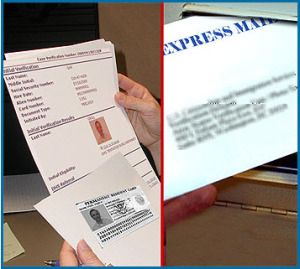
E-Verify has announced a new address which must be used by employers when mailing photos to DHS for case resolution. The photo matching process in E-Verify occurs automatically when an employee presents a green card or employment authorization document. If the photo presented by the employee does not match the photo in E-Verify, employers are instructed to notify the employee, and if he/she contests, to send a copy of the photo document to DHS.

This can be accomplished in two ways: (1) the employer can scan and upload a copy of the photo document (file must be in GIF format and be no larger than 1.5 megabytes) or (2) send a copy of the photo along with the DHS referral letter to the following new address:

U.S. Citizenship and Immigration Services
10 Fountain Plaza, 3rd Floor
Buffalo, NY 14202
Attn: Status Verification Office – Photo Tool

The E-Verify photo tool is currently available for both direct employers and designated agents (as of this month). The photo tool will also be made available to web services users who are using a third-party  electronic I-9 and E-Verify system, although there has been no requirement or deadline imposed by DHS for those employers to utilize it yet.

New E-Verify mandate proposed in Colorado

Former U.S. Rep. Tom Tancredo filed a ballot proposal today that would require all Colorado employers to use E-Verify to confirm employment eligibility of new hires. Modeled after Arizona’s E-Verify law, the proposal calls for penalties and fines, a phased-in timetable, and prohibitions on the use of independent contractors to intentionally avoid compliance. The measure still has to pass a legal review and other steps before Mr. Tancredo can begin collecting signatures to have it placed on the 2010 ballot.

Source: the Denver Post, 12/04/2009.

Social Security Administration answers questions on No-Match letters and E-Verify

The Social Security Administration (SSA) has not yet decided whether it will resume sending No-Match letters, according to a written statement issued today. The American Immigration Lawyers Association (AILA) had posed several questions to the SSA earlier last month concerning No-Match letters in light of the DHS’ recent decision to rescind the controversial No-Match letter rule. While today’s statement was brief, we did learn the following:

  • While the decision on sending No-Match letters remains to be seen, the SSA will continue sending letters directly to employees to request correction of discrepancies in their records. These letters (known as DECOR or Decentralized Correspondence letters) are not sent to employers.
  • The SSA has been engaged in a quality control study through its Office of Quality Performance (OQP) whereby they will contact an employer to request SSA documentation (either by mail or phone). According to SSA’s response today, this information is not being shared with other government agencies and is to be used for SSA internal purposes only. Thus far, seventy employers from six regions (Boston, New York, Kansas City, Dallas, Denver, and Seattle) have been contacted.

SSA also indicated that is not involved in conducting E-Verify compliance audits, data mining, or other E-Verify reporting. This appears to be under the exclusive jurisdiction of the DHS.